
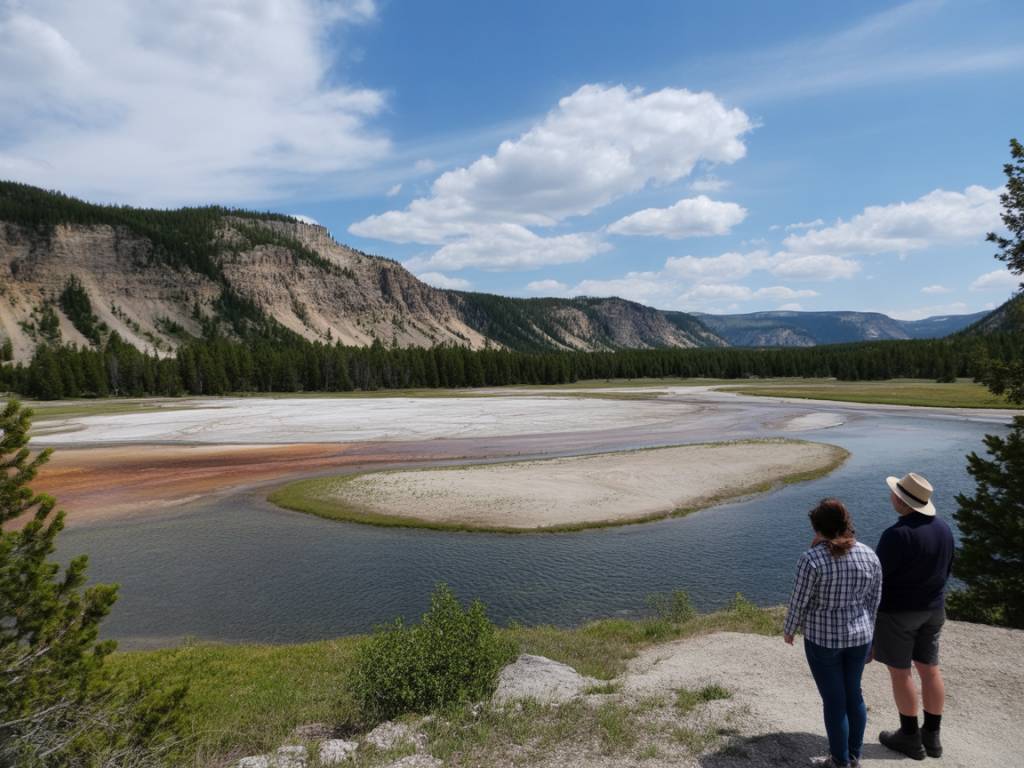
Visiting Yellowstone is one of the great travel experiences in the United States, but it also comes with a responsibility. This is not just a scenic backdrop for your vacation; it is a living, fragile ecosystem and the homeland of Indigenous peoples, bordered by small communities that depend heavily on tourism. Over the years, I have watched visitor numbers climb while rangers, local workers, and residents struggle to keep the park healthy and welcoming. The good news: with a bit of planning, you can dramatically reduce your impact and even contribute positively.
Understanding What “Responsible Travel” Really Means in Yellowstone
Responsible travel in Yellowstone is about more than picking up your trash. It means:
- Respecting wildlife and landscapes so they remain wild for generations.
- Reducing your footprint: waste, noise, traffic, and carbon emissions.
- Supporting local economies and respecting local cultures, especially Indigenous perspectives.
- Being patient and flexible in a park that is often crowded and unpredictable.
When I tour the park, I like to think of myself as a temporary guest in a vast home that belongs to bison, bears, wolves, hot springs, and rivers—as well as to the people who live and work around it all year. That mindset changes the way you move, spend, and even photograph.
Planning Your Visit: Timing, Routes, and Expectations
Most people arrive in Yellowstone in July and August, when traffic can be intense and the famous sites feel like outdoor stadiums. If your schedule allows, I strongly recommend visiting in late May–June or September–early October. You will still face crowds, but smaller ones, and your presence puts slightly less pressure on infrastructure and wildlife.
When planning your route, try to avoid the “checklist” mentality of racing from Old Faithful to Grand Prismatic to Lamar Valley in a single day. That sort of itinerary is hard on you, hard on the roads, and often leads to poor decisions born of fatigue and frustration. Instead, I suggest:
- Focusing on one region per day (e.g., Geyser Basin day, Canyon day, Lamar wildlife day).
- Building in “buffer time” for bison jams, construction delays, or simply staying longer at a place you like.
- Considering lesser-known areas and short trails near busy hubs to spread out impact.
Set realistic expectations: you might not see wolves, you might not get a parking spot at Grand Prismatic at noon, and you might hit a 45-minute bison traffic jam. Accepting that uncertainty is an essential part of responsible travel here.
Leave No Trace in a Thermal Wonderland
Yellowstone’s geothermal features are unlike anywhere else on Earth, and they are also frighteningly fragile. People sometimes underestimate just how thin and unstable the ground is in thermal areas. I have watched visitors step off boardwalks for a photo and sink into hot mud before rangers could intervene.
The classic Leave No Trace principles apply here, but with a Yellowstone twist:
- Stick to boardwalks and trails. In geyser basins, the “crust” can be a thin skin over boiling water. Stepping off is dangerous for you and damaging to the feature. If you see someone leaving the boardwalk, it is worth politely speaking up or alerting a ranger.
- Do not throw anything into hot springs or geysers. Coins, rocks, and trash not only clog vents and alter the chemistry; they can permanently change or kill a feature. Old Faithful and Morning Glory have already been damaged this way.
- Pack out everything, including micro-trash. Food wrappers, cigarette butts, and tissue accumulate quickly near parking lots and popular viewpoints. I like to keep a small bag in my daypack specifically for picking up bits of trash as I go.
- Watch where you step and sit. Off boardwalks and away from pavement, seemingly “barren” ground can be full of fragile plants and biological crusts that take decades to recover from a single footprint.
Think of yourself not as a spectator, but as a temporary steward. Every choice you make either helps preserve the park or adds to the wear.
Wildlife Etiquette: Watching Animals Without Harassing Them
For many visitors, seeing bison, bears, elk, and wolves is the highlight of Yellowstone. It is also where I see the most dangerous and irresponsible behavior. Park rules are clear: stay at least 25 yards (23 meters) from most wildlife and at least 100 yards (91 meters) from bears and wolves. In practice, I recommend even more distance, especially during calving and rutting seasons.
Here are key principles to follow:
- Use binoculars and telephoto lenses. If an animal fills your phone screen, you are too close. Respecting distance keeps you and the animal safe.
- Never feed wildlife—ever. A fed animal quickly becomes a dead animal. Once an animal associates humans with food, it often has to be relocated or euthanized.
- Stay in or near your vehicle during roadside sightings. Those so-called “bear jams” and “bison jams” become chaotic when people pour onto the road with cameras. I prefer to find a safe pullout, stay calm, and watch from a respectful distance.
- Read animal behavior. If an animal changes what it is doing because of you—staring, pawing, moving away—you are too close. Back up immediately.
- Leash your dog where allowed, and know where dogs are prohibited. Pets can stress wildlife and are not permitted on most trails or boardwalks.
Personally, I have found that my most memorable wildlife encounters come from quiet patience, not chasing the closest photo. Watching a distant wolf through a spotting scope at dawn feels far more special than a crowded roadside scrum around a bear at noon.
Travel Light: Waste, Water, and Transport
Yellowstone’s remote location makes waste management and resource use more complicated than in a city. Every piece of trash and every gallon of water used in a lodge has a cost. You can ease that burden with a few simple habits:
- Bring a reusable water bottle and coffee mug. Fill up at approved water stations instead of buying single-use bottles. At lodges and some gas stations, staff are generally happy to pour coffee into your own mug.
- Use refillable containers for snacks and lunches. Instead of a pile of plastic wrappers each day, pack food in reusable bags or small boxes.
- Carpool when you can. If you are traveling with friends or family, pack into one vehicle instead of multiples. Fewer cars equals less congestion and emissions.
- Turn off lights, heating, and A/C when you leave your room or cabin. Energy in and around the park often comes from distant sources and older infrastructure; using less is a quiet but meaningful form of respect.
- Use restrooms instead of going “wild” near high-use areas. Human waste and toilet paper accumulate quickly near trailheads and pullouts. If you need to go on the trail, follow proper backcountry techniques and pack out used paper when required.
Minimalism is your ally. Pack what you truly need, skip the disposable extras, and you will move more freely and leave a lighter footprint.
Supporting Local Communities and Indigenous Voices
Yellowstone does not exist in a vacuum. The gateway towns—Gardiner, West Yellowstone, Cody, Cooke City-Silver Gate, and others—carry the weight of seasonal tourism: traffic, housing pressure, and the challenge of offering services to millions of visitors while maintaining a livable community.
As a visitor, you can help tilt the balance in a positive direction:
- Stay in locally owned lodging when possible. Small motels, cabins, and B&Bs keep revenue in the community and often employ local families year-round.
- Eat at independent restaurants and cafés. Look for places that source regional ingredients or highlight local dishes. Ask staff what they recommend; you will often hear stories that never make it into guidebooks.
- Use local guides and outfitters. Wildlife tours, photography workshops, and guided hikes run by local companies are one of the best ways to support the regional economy while learning more deeply about the park.
- Shop from local artisans. Seek out galleries and craft shops that showcase regional artists rather than mass-produced souvenirs. You might pay a little more, but the story and impact are worth it.
It is equally important to recognize that Yellowstone sits on ancestral lands of Native nations, including the Crow, Shoshone, Blackfeet, and others. Their connections to this place long predate the creation of the national park.
Ways to honor that reality include:
- Taking time to learn about the tribes historically associated with the region.
- Visiting museums and cultural centers in surrounding towns that present Indigenous perspectives.
- Supporting Native-owned businesses and artists when you can.
When I spend time listening to local and Indigenous voices, my understanding of Yellowstone shifts from a “wilderness preserved for recreation” to a layered cultural landscape with deep, ongoing histories.
Photography and Social Media Without Harm
In the age of Instagram and TikTok, every hot spring and overlook is a potential backdrop. That visibility can inspire people to care, but it also drives risky behavior and overcrowding at certain “famous” spots. I encourage travelers to adopt an ethic of “quiet sharing.”
Some practical tips:
- Get the shot without breaking rules. No photo is worth leaving the boardwalk, approaching an animal, or blocking a trail. The best photographers I know pride themselves on working within constraints.
- Be mindful of geotagging. For especially sensitive sites or lesser-known areas, consider sharing images without precise location tags. This helps prevent sudden surges in visitation.
- Show good behavior in your posts. Images of people far too close to bison or sitting on thermal features normalize dangerous behavior. Presenting responsible practices in your photos sets a better example.
- Ask before photographing people. Rangers, local workers, and Indigenous performers or artisans deserve the same courtesy you would expect at home.
Ultimately, your camera can be a tool for advocacy: use it to highlight beauty, but also to tell honest stories about crowding, climate change, and the need for care.
When Things Go Wrong: Safety, Patience, and Perspective
Responsible travel also means being realistic about safety. Yellowstone’s beauty comes with genuine hazards—wild animals, boiling water, fast rivers, unpredictable weather, and limited cell service. The most sustainable trip is one where you and the emergency services are not put at unnecessary risk.
Before setting out each day, I recommend:
- Checking the National Park Service website or visitor center for the latest closures, wildlife alerts, and weather advisories.
- Carrying basic essentials: extra water, snacks, layers, a map, sunscreen, and a small first-aid kit.
- Letting someone know where you are headed, especially for longer hikes.
- Accepting that plans may change due to weather, road closures, or wildlife activity.
When something does disrupt your plans, responsible travel means adjusting with patience rather than anger. The bison in the road are not “in your way”; you are in theirs. A closed trail is not an inconvenience but a form of protection—perhaps for nesting birds, eroding slopes, or a grizzly feeding on a carcass.
On my own trips, I have found that the most rewarding experiences often arise precisely when my original plan fails and I am forced to explore a quieter overlook or a side trail I had never noticed before.
Leaving Yellowstone Better Than You Found It
By the time you drive out of the park, your impact—positive or negative—will extend far beyond your memories and photos. You may have contributed to worn-out trails and stressed wildlife, or you may have supported local businesses, picked up litter, and modeled good behavior for others.
If you want a simple personal checklist, ask yourself:
- Did I respect all closures, boardwalks, and distance rules for wildlife?
- Did I reduce my waste and energy use where I could?
- Did I spend money in ways that genuinely help local communities?
- Did I learn something new about Yellowstone’s ecology, history, and Indigenous connections?
- Did I encourage others—online or in person—to travel more thoughtfully here?
Yellowstone does not need perfection from its visitors; it needs care, humility, and a willingness to think beyond the next selfie or souvenir. If you can carry that mindset with you, you will not only visit Yellowstone—you will help protect the very qualities that make it worth visiting in the first place.