
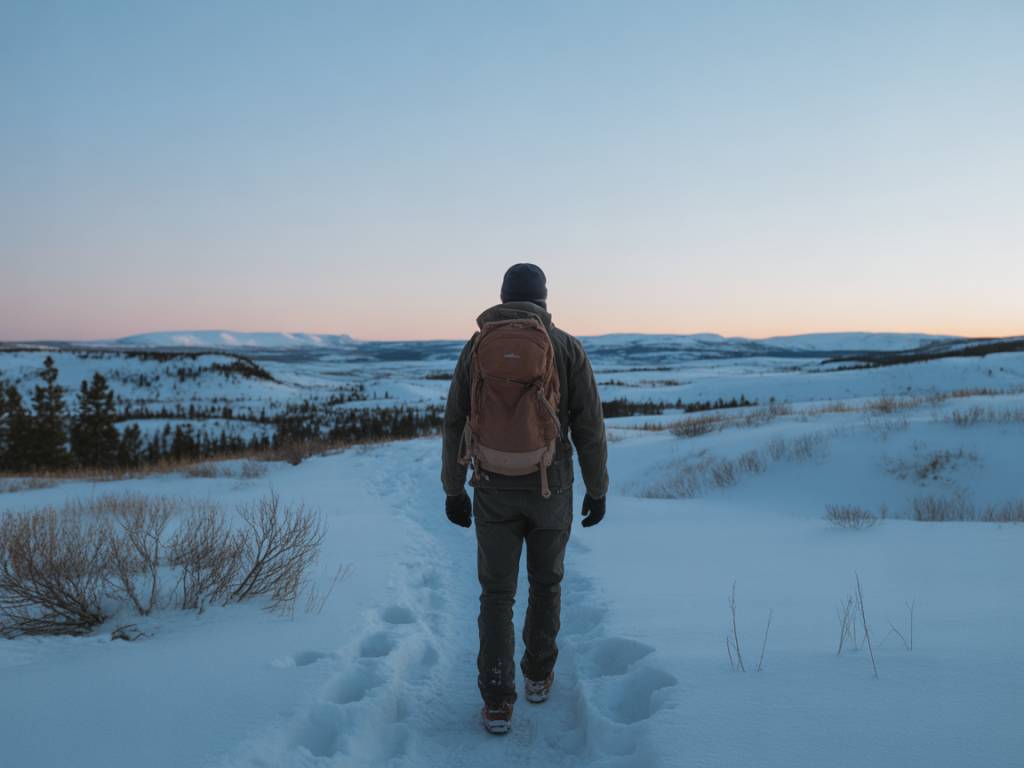
Why Yellowstone in Winter Feels Like a Different Planet
Yellowstone in winter is not just a colder version of summer. It is effectively a different park, with different rhythms, different sounds, and a different set of rules for travelers. The crowds are gone, the roads are mostly snow-covered and closed to regular cars, and the wildlife behaves differently in the stillness and scarcity of the cold season.
As a journalist and guide who has walked these boardwalks in minus 25°C air, I can say this: if you are willing to accept the constraints of winter, this is the season when Yellowstone feels most raw and authentic. Steam pillars rise from the geyser basins into sharp blue skies, bison plow through snow like moving boulders, and the silence between gusts of wind can be almost unsettling.
But winter in Yellowstone also demands preparation and respect, not only for safety but for the fragile environment and the wildlife that is already under stress. Sustainable travel here is not a marketing label; it’s simply the only sensible way to visit.
Getting Around: Snowcoaches, Skis and the Art of Slowing Down
Most of Yellowstone’s roads are closed to private vehicles in winter. Typically, the only road plowed for regular traffic is the stretch between the North Entrance (Gardiner, Montana) and Cooke City, passing through Mammoth Hot Springs and the Lamar Valley. Everything else is accessible only by:
- Guided snowcoach tours
- Guided or permitted snowmobile trips
- Cross-country skis or snowshoes (mostly from lodges or trailheads)
From a sustainability and experience standpoint, I strongly prefer snowcoaches and human-powered travel to snowmobiles. Modern snowcoaches use low-emission engines and carry multiple people at once, which reduces noise and disturbance to wildlife compared to a chain of individual sleds. When I travel with photographers or first-time visitors, I find snowcoaches offer a better balance between comfort, safety, and impact.
Cross-country skiing and snowshoeing are, in my opinion, the best ways to feel the park in winter. You don’t just see the landscape; you inhabit it, hearing the snow compress under your boots and watching your breath freeze in the air. Several classic routes start near Mammoth and Old Faithful, and many are suitable for beginners with a reasonable level of fitness.
Key Winter Areas and What Makes Each Special
In a park as vast as Yellowstone, you cannot “do it all” in winter. Choosing one or two regions and exploring them deeply is both more satisfying and more sustainable.
Mammoth Hot Springs: Where Ice Meets Steam
Mammoth is one of the few hubs accessible by car all winter, and it makes an excellent base. The travertine terraces—those cascading white and orange steps you’ve probably seen in photos—are fascinating in the cold. Steam rises, delicate ice crystals form on dead branches, and the contrast between snow and geothermal activity is particularly dramatic.
In winter, I especially enjoy:
- Walking the boardwalks at first light, when the terraces catch the morning sun and you’re likely to have the place almost to yourself.
- Short snowshoe loops around the terraces (staying strictly on designated paths, of course) to appreciate the scale without adding to erosion or off-trail damage.
- Evening wildlife watching along the road toward Tower Junction, where elk and bighorn sheep are often visible on the hillsides.
Mammoth is also an administrative and historical center, and staying here reduces the need for long transfers deeper into the park if your time is limited.
Lamar Valley: Winter’s Wildlife Corridor
Lamar Valley is often described as Yellowstone’s “Serengeti,” and in winter the comparison becomes even more evident. Snow makes it easier to spot animals and to read the landscape through tracks. You will often see:
- Large bison herds, grazing and moving in tight-knit groups
- Elk and pronghorn on the valley slopes
- Coyotes mousing in the snow, listening for prey beneath the crust
Lamar is also one of the prime areas to look for wolves. Realistically, wolf sightings are never guaranteed, and ethical observation means keeping a huge distance and never approaching on foot. The most respectful and effective way to watch them is often:
- Stopping at pullouts with experienced naturalist guides
- Using high-quality spotting scopes instead of crowding closer
- Staying quiet and minimizing noise, doors slamming, and sudden movements
Personally, I recommend dedicating at least a full day or two in the Lamar Valley, especially if wildlife is a priority. The winter light here at dawn and dusk has a softness that gives even the harshest scenes a cinematic feel.
Old Faithful and the Geyser Basins Under Snow
The Old Faithful area, accessible by snowcoach or snowmobile tour, can feel like an isolated village in the middle of another world during winter. The main attraction, of course, remains the geysers, but the experience of watching an eruption when the air is far below freezing is very different from summer.
A few things I particularly value here in winter:
- Old Faithful at sunrise or in late afternoon, when the steam plume catches colored light and the surrounding trees are coated in hoarfrost.
- The Upper Geyser Basin boardwalks, which can be walked on compacted snow, offering close but controlled access to pools and geysers without trampling fragile ground.
- Quiet interior time at the visitor center, learning about hydrothermal systems before stepping back outside to see them in action.
Of all winter experiences in Yellowstone, I find the contrast between deep cold and scalding water most striking here. It’s also where staying on the designated paths is absolutely non-negotiable, both for your safety and the safety of delicate thermal features that can be destroyed with a single careless footprint.
Sustainable Winter Activities: Choosing Wisely
When people ask me how to “do Yellowstone right” in winter, I usually suggest building the trip around low-impact activities. These not only reduce your environmental footprint; they also tend to offer richer, slower experiences.
- Cross-country skiing: Trails around Mammoth, Old Faithful, and near the Northeast Entrance offer varying levels of difficulty. Glide quietly through forest corridors where you might see fox tracks or find a lone bison standing in a circle of exposed ground it has pawed out of the snow.
- Snowshoeing: Ideal for shorter outings or if you are new to winter sports. Guided snowshoe walks with naturalists are a good introduction, pairing exercise with education about ecology and geology.
- Guided wildlife watching: Join small-group tours that emphasize ethics: keeping distances, avoiding crowding of animals, and prioritizing observation over “getting the shot.”
- Photography with restraint: Winter light and steam make for dramatic images, but responsible photographers use long lenses and accept that some animals will remain distant silhouettes, not close-ups.
Snowmobiles still play a role in winter access, especially for those with limited time or mobility, but I encourage visitors to consider group tours, modern four-stroke machines, and operators with strong environmental commitments. The fewer machines on the snow, the quieter and cleaner the experience for both wildlife and people.
Practical Tips for a Low-Impact Winter Visit
Planning ahead is essential. Winter capacity in Yellowstone is limited by design, which helps protect the park but also means you cannot improvise accommodation or transport at the last minute.
- Book early: Lodging in Mammoth, the Old Faithful area, and nearby gateway towns can fill months in advance. This is especially true around holidays.
- Layer your clothing intelligently: Think base layer, insulating layer, and windproof outer layer. Cotton is your enemy; wool and technical synthetics are your allies.
- Protect your extremities: Good mittens, insulated boots, and face protection are essential. Camera batteries die quickly in the cold; keep them close to your body.
- Bring a reusable bottle and thermos: Hydration matters even in the cold, and refilling reduces plastic waste.
- Stick to marked trails and boardwalks: In winter, the temptation to “cut across the snow” is strong, but you may be walking over fragile soil, hidden hot springs, or wildlife bedding areas.
- Respect wildlife distances: Yellowstone’s rules are clear—stay at least 23 meters (25 yards) from most wildlife and 91 meters (100 yards) from bears and wolves. In winter, I recommend even greater distances when possible. Every step an animal takes to avoid you is precious energy lost.
- Travel with small groups: Smaller groups mean less noise, less disturbance, and more flexibility to adapt to conditions without crowding viewpoints.
When to Go and How Long to Stay
Winter in Yellowstone typically runs from December through March, but the experience shifts across those months:
- Early winter (December): Fresh snow, shorter days, often very cold. It can feel particularly wild and empty.
- Mid-winter (January–February): Deep snowpack, reliable cold, excellent for wolf watching and skiing, but demanding conditions.
- Late winter (March): Slightly longer days, occasional thaws, changing wildlife behavior as animals anticipate spring.
If this is your first winter visit, I usually suggest at least four to six days. That allows time for weather delays, a mix of guided outings and self-directed exploration, and the chance to settle into the slower pace that winter enforces. Rushing through Yellowstone in winter feels not only stressful but slightly absurd; the landscape insists that you slow down.
Why Winter Yellowstone Stays With You
Yellowstone in summer can be spectacular, but it is also a season of busy parking lots, traffic jams, and quick roadside stops. Winter strips all that away. You are left with elemental forces—heat and cold, life and scarcity, noise and silence—playing out on a vast stage of snow.
What I appreciate most is how winter forces a certain humility. You move more slowly, you plan more carefully, and you accept that some places will remain out of reach. In exchange, the park reveals details you might never notice in high season: the sound of ice cracking on the edge of a hot spring, the way a raven’s feathers catch drifting snow, the quiet perseverance of an old bison grazing along a wind-scoured ridge.
If you are willing to embrace the logistical challenges and travel thoughtfully, Yellowstone in winter offers not just a beautiful trip, but a deeper lesson in how to be a respectful guest in a landscape that is far larger and more powerful than we are.